
Grease Interceptor Cleaning
Grease Interceptor Pumping in Riverside County
Riverside Grease Company pumps in-ground grease interceptors from 500 to 3,000+ gallons, full evacuation, solids removal, tee and baffle inspection, and compliance paperwork on every job.
The service
Full-volume pumping, done right
In-ground interceptors are where a kitchen's grease problem hides. When only the top layer is pumped, the sludge blanket on the bottom keeps growing until the outlet tee plugs and the kitchen floods. Our vacuum trucks evacuate the entire tank, grease cap, water column and settled solids.
We then inspect inlet and outlet tees, the baffle wall, lids and risers, and flag anything that needs repair before it becomes a shutdown. Everything is hauled to a permitted disposal facility and documented.
Every visit includes
- Complete evacuation of liquid, grease cap and solids
- Sidewalls and baffle wall scraped down
- Visual inspection of components, including inlet and outlet tees
- Lid, riser and gasket condition check
- Backflush of the tank as needed
- Waste Manifest Report
- Service report for sewer district compliance
- Frequency recommendation based on measured buildup
Interceptor 101
Why interceptor pumping can't wait
Because most grease interceptors sit in-ground outside the building, in the back lot, behind the kitchen or under the walkway, they're easy to forget. That's exactly why they cause the biggest problems. An interceptor is your property's last line of defense between the kitchen and the public sewer, and it quietly fills with a grease cap on top and a sludge blanket on the bottom every single day.
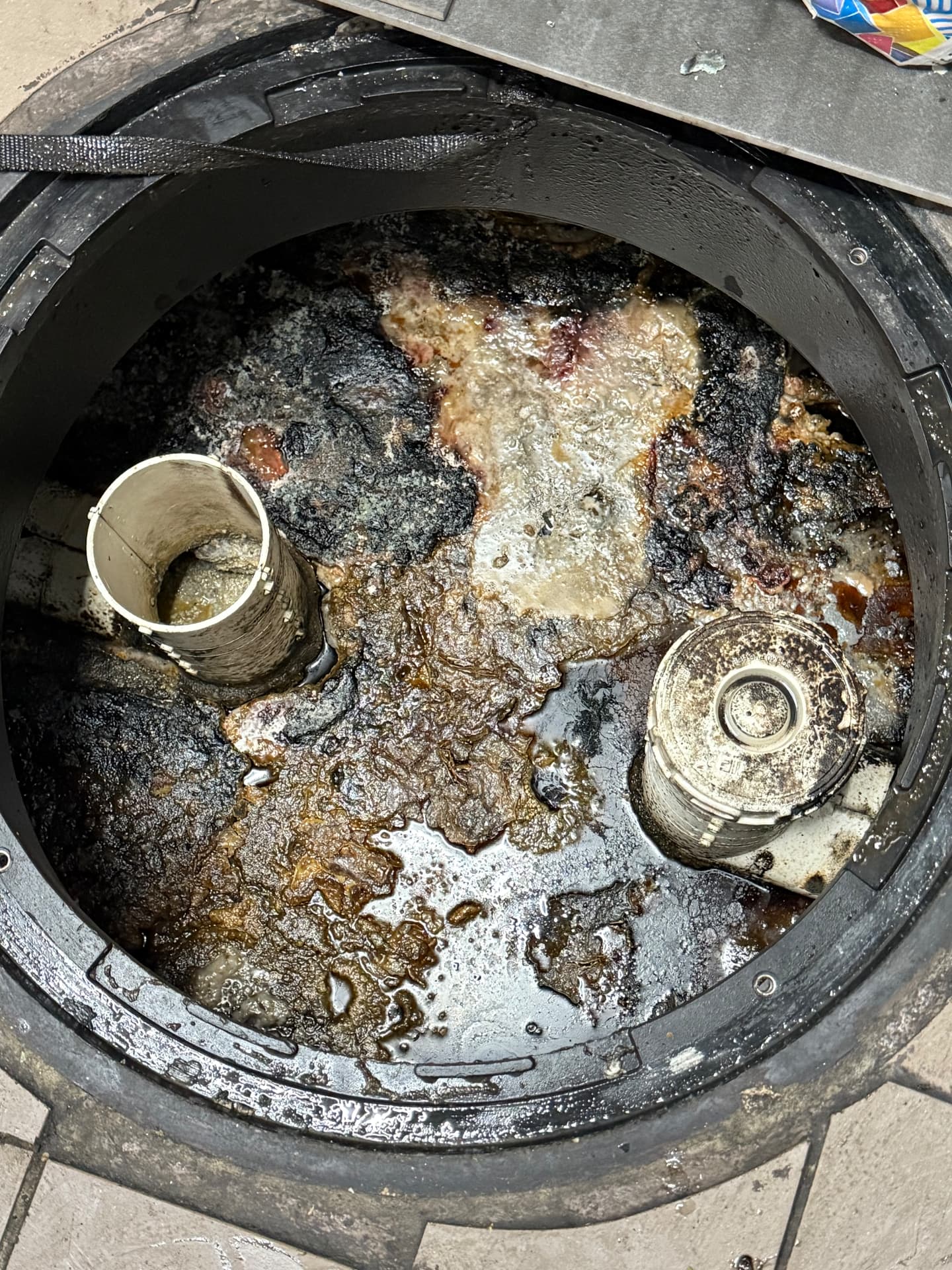
When buildup crosses the 25% threshold, the tank stops separating and starts passing grease downstream. The result is a plugged outlet tee, a full-kitchen drain backup, or a sewer overflow the city traces straight back to your address. Riverside County FOG inspectors look at interceptor Waste Manifest Reports, a missing or overdue pump-out is a compliance violation on its own, before anything ever overflows.
Regular full-volume pumping protects you three ways: your drains keep flowing, your documentation keeps inspectors satisfied, and the city never has a reason to send you an enforcement letter. One scheduled visit a quarter is dramatically cheaper than a single after-hours backup during dinner service.
What neglect costs a kitchen
- Whole-kitchen drain backups and forced closures
- Sewer overflows traced back to your business
- FOG program fines and enforcement letters
- Failed inspections without current Waste Manifest Reports
- Corrosion of tank walls, tees and baffles over time
- Emergency pumping at premium after-hours rates
- Odors in the parking lot and dining room
- Liability if overflow reaches the storm drain
Sizing & scheduling
Typical interceptor service frequency
| Interceptor size | Kitchen type | Typical frequency |
|---|---|---|
| 500, 750 gal | Café, deli, small restaurant | Quarterly |
| 750, 1,000 gal | Full-service restaurant | Every 60-90 days |
| 1,000, 1,500 gal | High-volume / fry-heavy kitchen | Every 30-60 days |
| 1,500, 3,000+ gal | Hotel, casino, school, hospital | Monthly to quarterly |
Frequencies are a starting point, we measure buildup on each visit and adjust so you stay under the 25% rule.
Overflow diagram
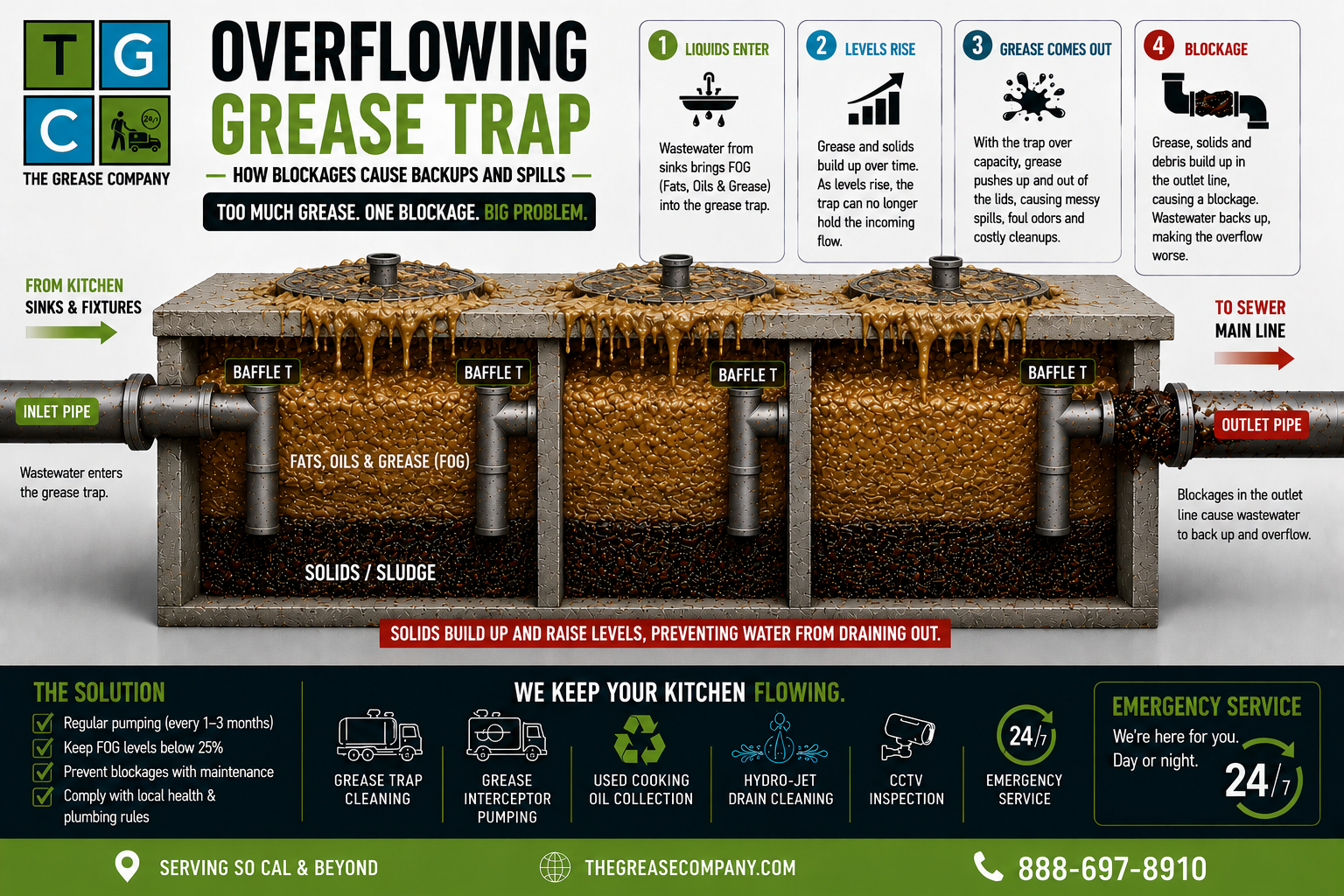
How an overflowing grease interceptor causes backups and spills
Liquids enter, grease and solids build, the tank runs out of capacity, and grease pushes out of the lids and plugs the outlet line to the sewer. Regular pumping every 1-3 months keeps FOG under 25% and stops the chain reaction before it starts.
On the job
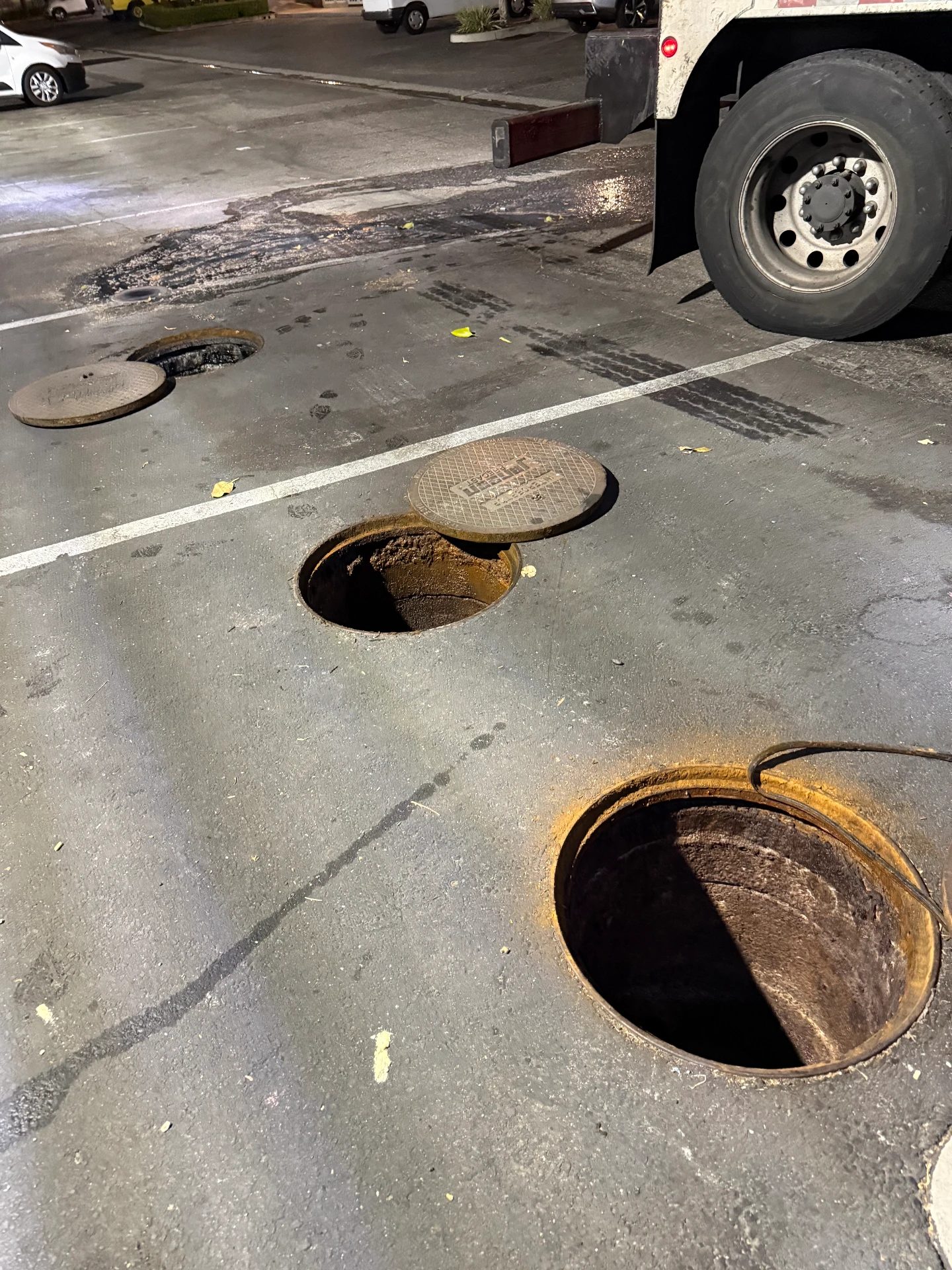
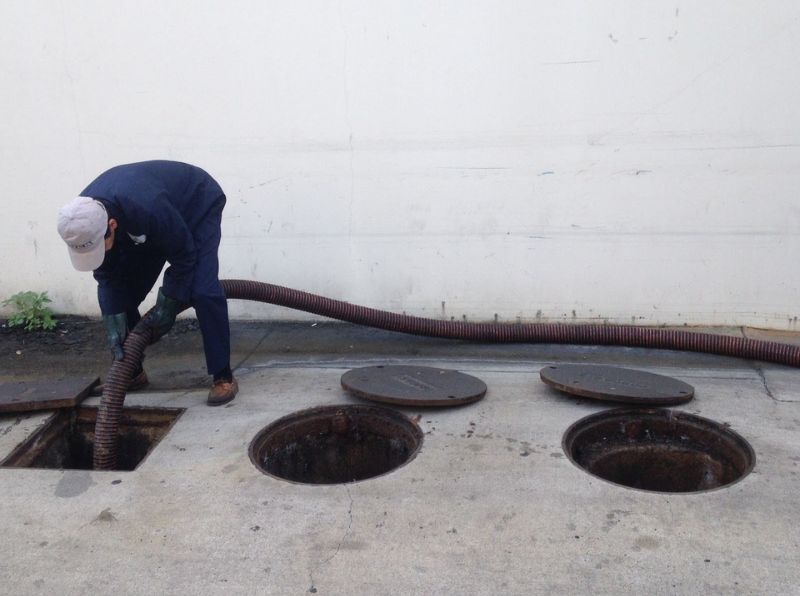
Outdoor interceptor pumping, start to finish
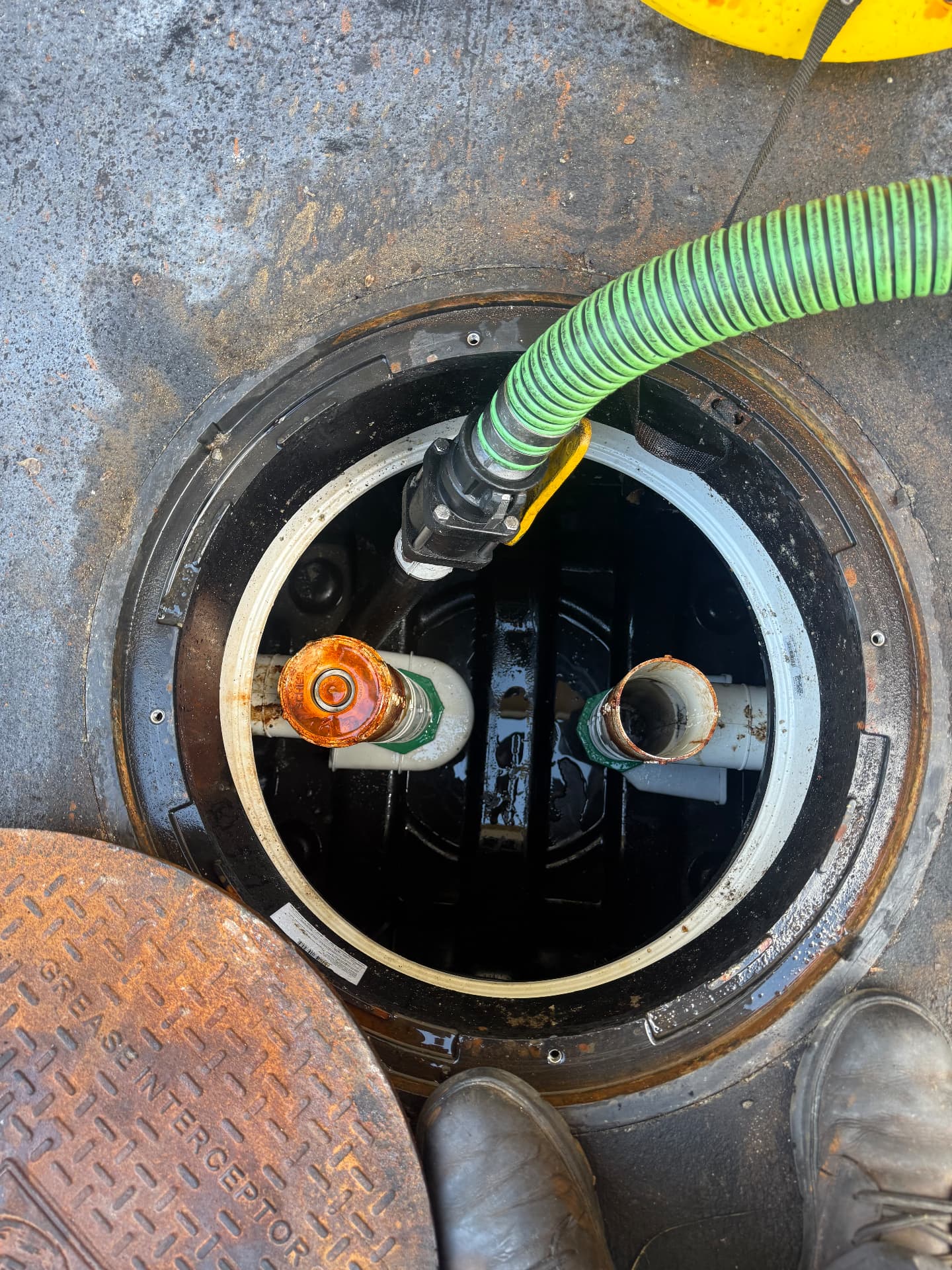
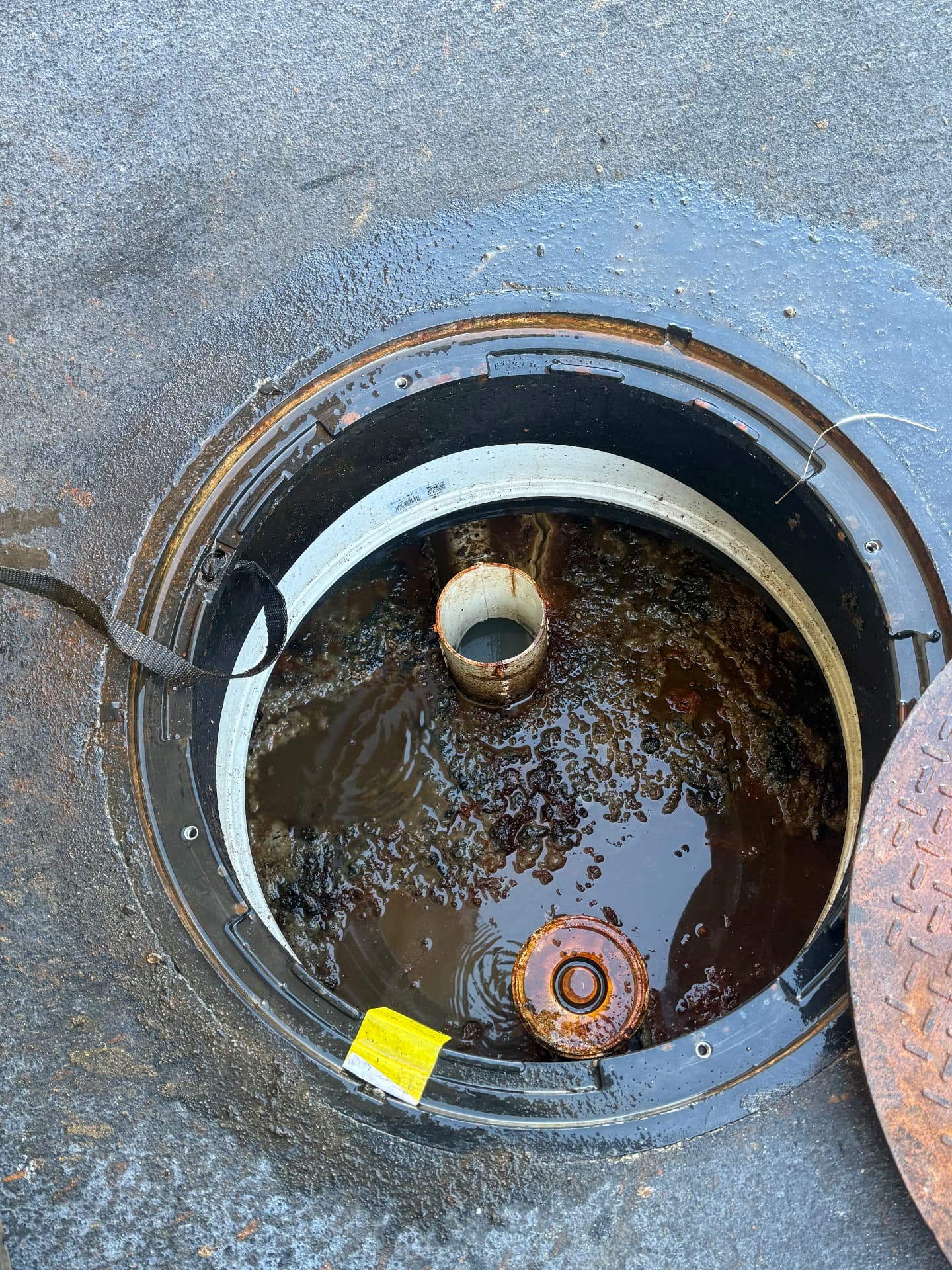
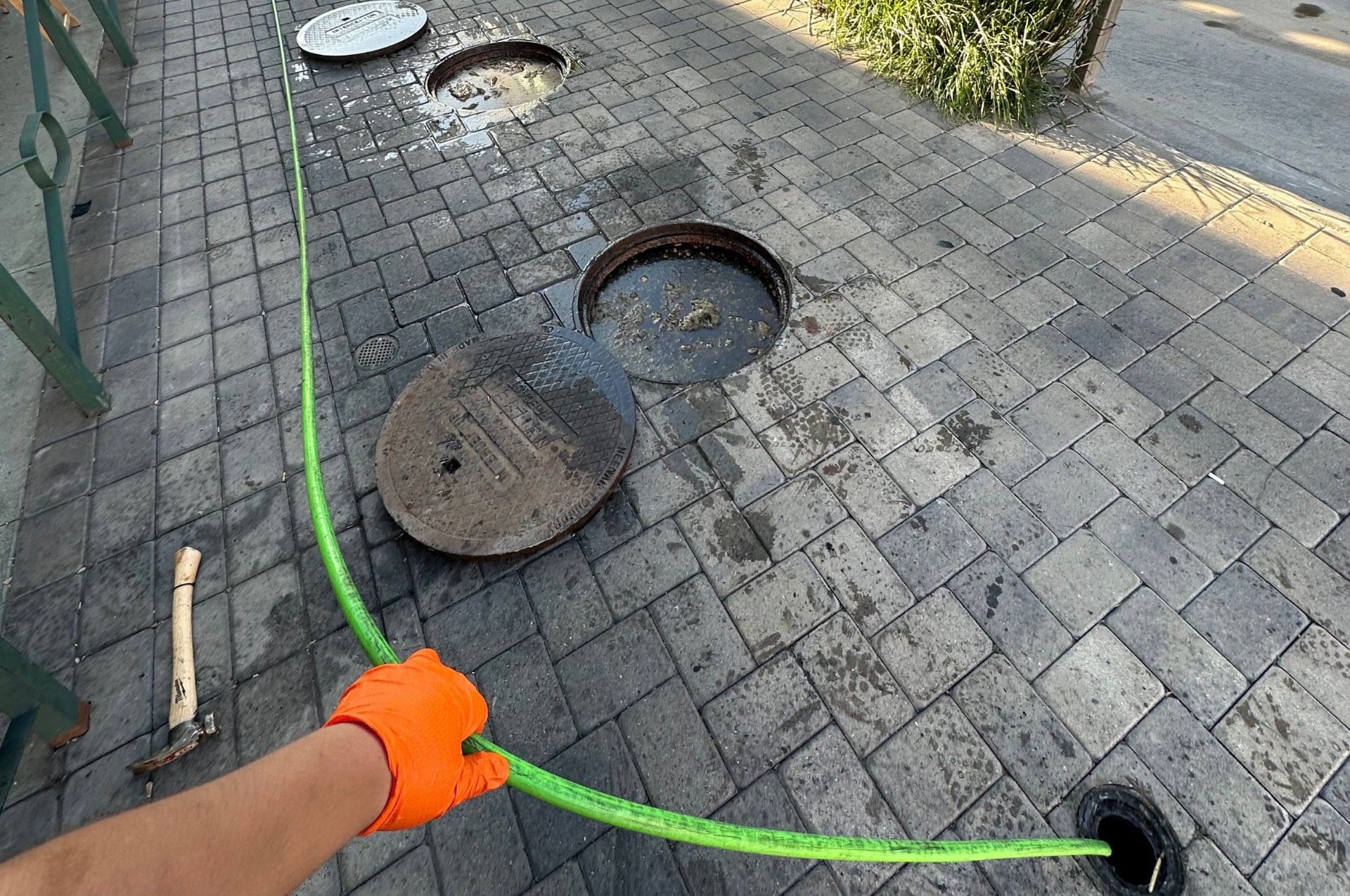
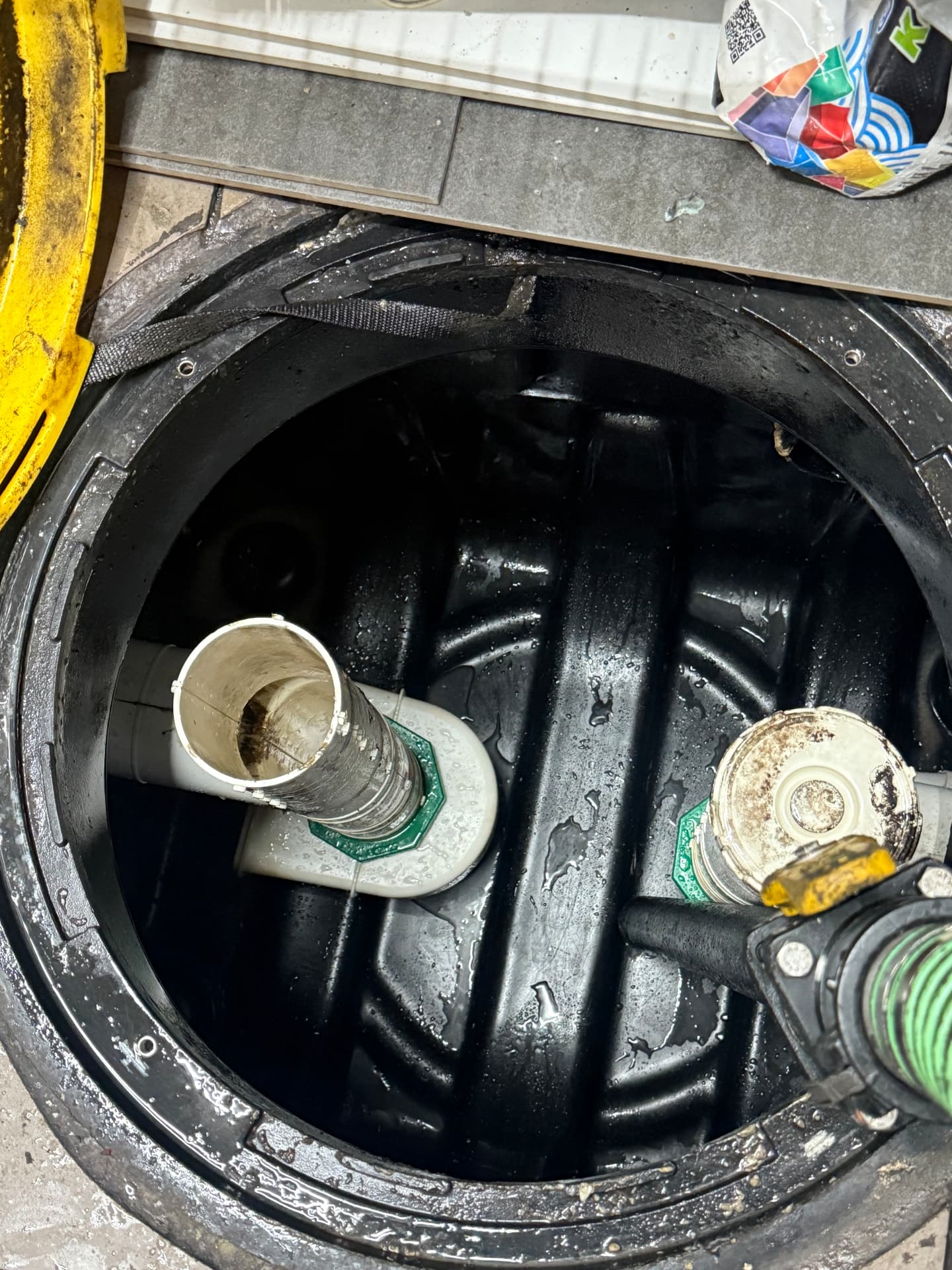
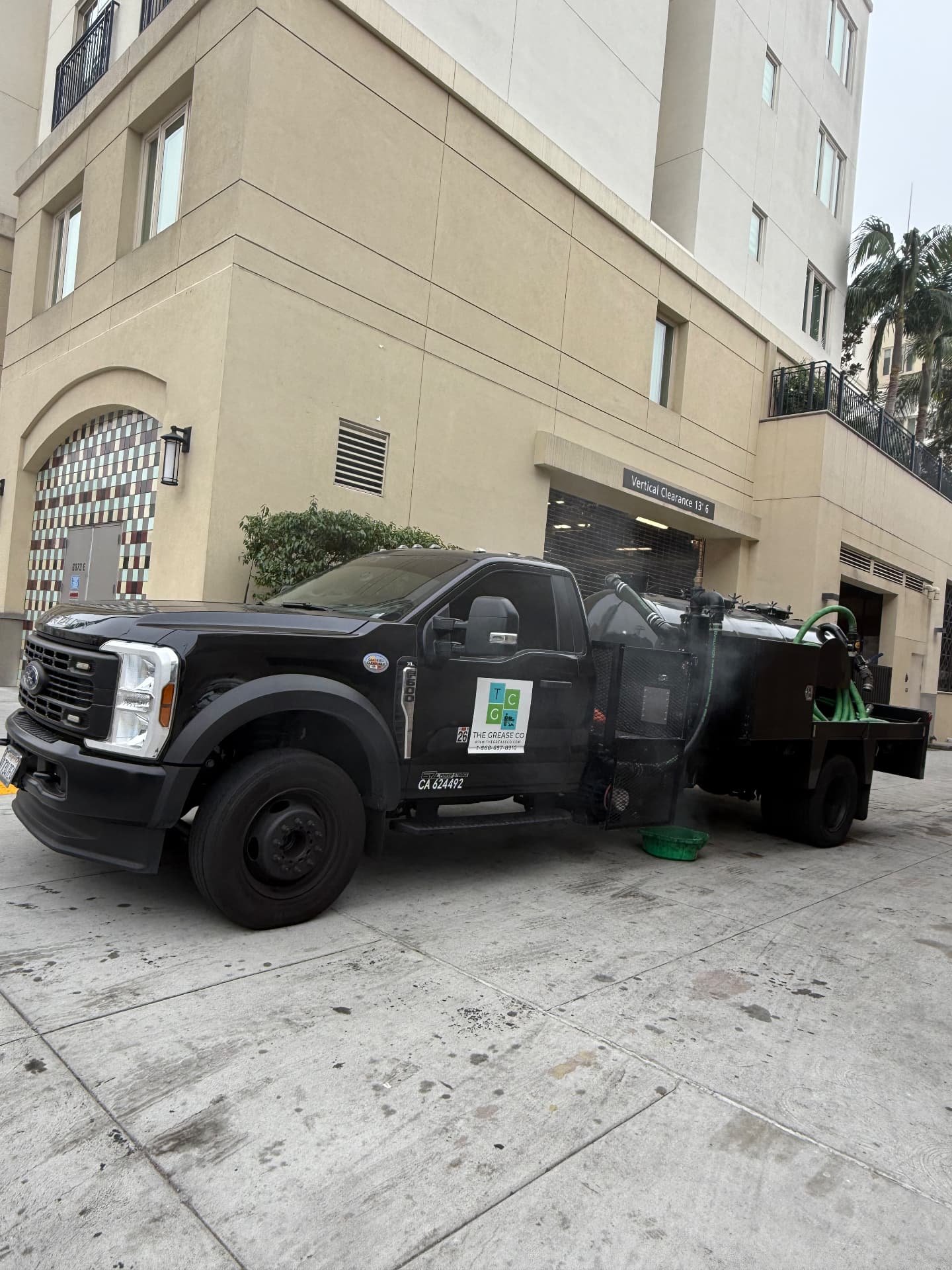
Most grease interceptors are in-ground outside the building, in the back lot, the loading area or the walkway behind the kitchen. We open the lids, pump the full tank and leave the area clean, usually after hours.
Common questions
Grease interceptor FAQs
What's the difference between a grease trap and a grease interceptor?
A grease trap is the smaller indoor unit near the sinks, usually 20 to 100 gallons. A grease interceptor is the large in-ground tank outside, typically 500 to 3,000+ gallons, serving the whole kitchen. Interceptors are pumped less often but require a vacuum truck and full-volume disposal.
How often should a grease interceptor be pumped?
Most Riverside County kitchens fall on a quarterly schedule, with high-volume operations at every 30 to 60 days. Frequency is driven by the 25% rule, grease and solids must stay under a quarter of the total tank depth.
Do you pump the entire interceptor?
Yes. We remove the full liquid volume plus the settled solids, then check the inlet and outlet tees and baffle wall. Partial pumping leaves solids behind and shortens the time to your next backup.
What happens when a grease interceptor overflows?
Once the grease cap and sludge blanket pass 25%, the tank can no longer hold incoming flow. Grease pushes up out of the lids and back into the outlet line, so wastewater backs up into the kitchen and spills across the lot. Cleanup, emergency pumping and possible fines all land on the business.
Where is my grease interceptor located?
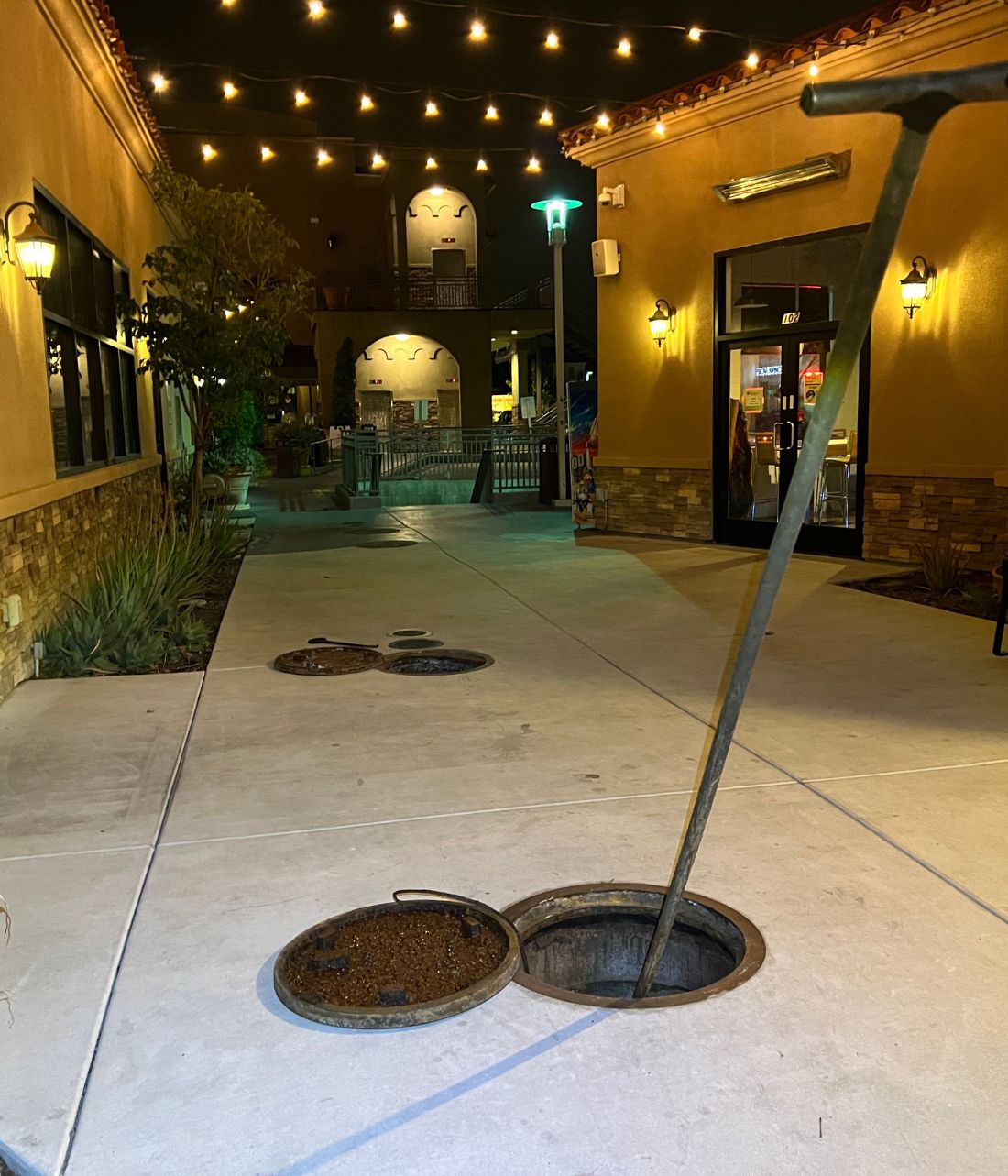
Almost always in-ground outside the building, in the back lot, behind the kitchen, in the loading area or under a walkway, marked by two or three round manhole-style lids. If you can't find yours, we will locate it on the first visit.
How long does interceptor pumping take?
Most 750 to 1,500 gallon interceptors take 45 to 90 minutes including tee inspection and cleanup. Larger hotel or casino tanks can take a few hours. We work after hours so the lot and dining room stay clear.
Do you clean the lines after pumping?
We flow-check the inlet and outlet while the tank is empty and flag restrictions. If a line is plugged, we let you know right away so it can be cleared before the tank refills and grease backs up again.
Can you handle inspection reports for the sewer district?
We provide a Waste Manifest Report and service report on every interceptor pumping, with volume removed and the permitted disposal facility, ready to hand to your inspector.
Riverside County Service Area
Interceptor pumping throughout Riverside County
Vacuum trucks routed daily through the Inland Empire and Coachella Valley.
- Grease Trap Pumping & Cleaning
- Grease Interceptor Pumping & Cleaning
- Used Cooking Oil Collection & Pick Up
- Cooking Oil Disposal
- Expired Oil Removal
Riverside
Downtown, Canyon Crest and Magnolia Center kitchens
- Grease Trap Pumping & Cleaning
- Grease Interceptor Pumping & Cleaning
- Used Cooking Oil Collection & Pick Up
- Cooking Oil Disposal
- Expired Oil Removal
Corona
Restaurants along the 91 corridor
- Grease Trap Pumping & Cleaning
- Grease Interceptor Pumping & Cleaning
- Used Cooking Oil Collection & Pick Up
- Cooking Oil Disposal
- Expired Oil Removal
Moreno Valley
Schools, hospitals and quick service kitchens
- Grease Trap Pumping & Cleaning
- Grease Interceptor Pumping & Cleaning
- Used Cooking Oil Collection & Pick Up
- Cooking Oil Disposal
- Expired Oil Removal
Temecula
Old Town restaurants and wineries
- Grease Trap Pumping & Cleaning
- Grease Interceptor Pumping & Cleaning
- Used Cooking Oil Collection & Pick Up
- Cooking Oil Disposal
- Expired Oil Removal
Murrieta
Cafes, bakeries and family dining
- Grease Trap Pumping & Cleaning
- Grease Interceptor Pumping & Cleaning
- Used Cooking Oil Collection & Pick Up
- Cooking Oil Disposal
- Expired Oil Removal
Menifee
Newer retail centers and franchises
- Grease Trap Pumping & Cleaning
- Grease Interceptor Pumping & Cleaning
- Used Cooking Oil Collection & Pick Up
- Cooking Oil Disposal
- Expired Oil Removal
Hemet
Care facilities and diners
- Grease Trap Pumping & Cleaning
- Grease Interceptor Pumping & Cleaning
- Used Cooking Oil Collection & Pick Up
- Cooking Oil Disposal
- Expired Oil Removal
San Jacinto
Markets and taquerias
- Grease Trap Pumping & Cleaning
- Grease Interceptor Pumping & Cleaning
- Used Cooking Oil Collection & Pick Up
- Cooking Oil Disposal
- Expired Oil Removal
Perris
Truck stops and warehouse cafeterias
- Grease Trap Pumping & Cleaning
- Grease Interceptor Pumping & Cleaning
- Used Cooking Oil Collection & Pick Up
- Cooking Oil Disposal
- Expired Oil Removal
Lake Elsinore
Casino, brewery and lakefront dining
- Grease Trap Pumping & Cleaning
- Grease Interceptor Pumping & Cleaning
- Used Cooking Oil Collection & Pick Up
- Cooking Oil Disposal
- Expired Oil Removal
Wildomar
Small format restaurants
- Grease Trap Pumping & Cleaning
- Grease Interceptor Pumping & Cleaning
- Used Cooking Oil Collection & Pick Up
- Cooking Oil Disposal
- Expired Oil Removal
Canyon Lake
Clubhouse and community kitchens
- Grease Trap Pumping & Cleaning
- Grease Interceptor Pumping & Cleaning
- Used Cooking Oil Collection & Pick Up
- Cooking Oil Disposal
- Expired Oil Removal
Jurupa Valley
Industrial kitchens and commissaries
- Grease Trap Pumping & Cleaning
- Grease Interceptor Pumping & Cleaning
- Used Cooking Oil Collection & Pick Up
- Cooking Oil Disposal
- Expired Oil Removal
Eastvale
Fast casual and grocery delis
- Grease Trap Pumping & Cleaning
- Grease Interceptor Pumping & Cleaning
- Used Cooking Oil Collection & Pick Up
- Cooking Oil Disposal
- Expired Oil Removal
Norco
Event venues and BBQ kitchens
- Grease Trap Pumping & Cleaning
- Grease Interceptor Pumping & Cleaning
- Used Cooking Oil Collection & Pick Up
- Cooking Oil Disposal
- Expired Oil Removal
Beaumont
Highway 60 corridor restaurants
- Grease Trap Pumping & Cleaning
- Grease Interceptor Pumping & Cleaning
- Used Cooking Oil Collection & Pick Up
- Cooking Oil Disposal
- Expired Oil Removal
Banning
Casinos, diners and travel centers
- Grease Trap Pumping & Cleaning
- Grease Interceptor Pumping & Cleaning
- Used Cooking Oil Collection & Pick Up
- Cooking Oil Disposal
- Expired Oil Removal
Calimesa
Roadside restaurants
- Grease Trap Pumping & Cleaning
- Grease Interceptor Pumping & Cleaning
- Used Cooking Oil Collection & Pick Up
- Cooking Oil Disposal
- Expired Oil Removal
Palm Springs
Hotels, resorts and bars
- Grease Trap Pumping & Cleaning
- Grease Interceptor Pumping & Cleaning
- Used Cooking Oil Collection & Pick Up
- Cooking Oil Disposal
- Expired Oil Removal
Cathedral City
Family restaurants and markets
- Grease Trap Pumping & Cleaning
- Grease Interceptor Pumping & Cleaning
- Used Cooking Oil Collection & Pick Up
- Cooking Oil Disposal
- Expired Oil Removal
Rancho Mirage
Resorts and country clubs
- Grease Trap Pumping & Cleaning
- Grease Interceptor Pumping & Cleaning
- Used Cooking Oil Collection & Pick Up
- Cooking Oil Disposal
- Expired Oil Removal
Palm Desert
El Paseo dining district
- Grease Trap Pumping & Cleaning
- Grease Interceptor Pumping & Cleaning
- Used Cooking Oil Collection & Pick Up
- Cooking Oil Disposal
- Expired Oil Removal
Indian Wells
Resort and event catering kitchens
- Grease Trap Pumping & Cleaning
- Grease Interceptor Pumping & Cleaning
- Used Cooking Oil Collection & Pick Up
- Cooking Oil Disposal
- Expired Oil Removal
La Quinta
Hotels and golf club kitchens
- Grease Trap Pumping & Cleaning
- Grease Interceptor Pumping & Cleaning
- Used Cooking Oil Collection & Pick Up
- Cooking Oil Disposal
- Expired Oil Removal
Indio
Festival grounds and casinos
- Grease Trap Pumping & Cleaning
- Grease Interceptor Pumping & Cleaning
- Used Cooking Oil Collection & Pick Up
- Cooking Oil Disposal
- Expired Oil Removal
Coachella
Markets, panaderias and taquerias
- Grease Trap Pumping & Cleaning
- Grease Interceptor Pumping & Cleaning
- Used Cooking Oil Collection & Pick Up
- Cooking Oil Disposal
- Expired Oil Removal
Desert Hot Springs
Spas and small restaurants
- Grease Trap Pumping & Cleaning
- Grease Interceptor Pumping & Cleaning
- Used Cooking Oil Collection & Pick Up
- Cooking Oil Disposal
- Expired Oil Removal
Video library
Watch grease service in action
Clips from our crews pumping traps and interceptors, plus quick tips on keeping your kitchen compliant.
Step by step
How we clean a grease interceptor, step by step
This is the exact order our crews work in, from coning off the lids to disposal at an authorized waste receiving facility.
- 1
Site preparation and access
Secure the work area and locate all accessible interceptor covers. Inspect the surrounding area for access restrictions, existing damage or unsafe conditions before beginning service.
- 2
Open covers and lids
Carefully remove all accessible covers and lids to expose the interceptor compartments. Covers are placed in a secure location to prevent damage and maintain a safe work area.
- 3
Initial visual assessment
Inspect the interceptor contents and note the approximate levels of floating grease, wastewater and settled solids. Visible conditions are documented before pumping begins.
- 4
Vacuum extraction
Using a commercial vacuum truck we remove the interceptor contents: floating fats, oils and grease, wastewater, food particles and debris, and settled sludge and solids. All accessible compartments are pumped for a complete cleaning.
- 5
Interior wall and component scraping
Scrape accessible grease and solid buildup from the interior walls, baffles, tees and other reachable components. All work is performed from outside the interceptor; confined space entry is not included.
- 6
Removal of remaining material
Vacuum the loosened grease, sludge and debris created during scraping. Additional extraction is performed as necessary to leave the accessible areas visibly clean.
- 7
Visual component inspection
Inspect accessible components for visible signs of damage or deterioration: inlet and outlet tees, baffles and divider walls, pipe connections, interior walls, and covers, lids and frames. Any visible damage, missing components or recommended repairs are documented and reported to the customer.
- 8
Service documentation
Record the interceptor condition and service details. Before and after photographs may be included when required or available.
- 9
Secure covers and lids
Reinstall all covers and lids securely. Each cover is confirmed properly seated and the surrounding service area is left clean and orderly.
- 10
Waste Manifest Report completion
Complete the required Waste Manifest Report and service report, including the service location, estimated quantity removed, waste classification and disposal information.
- 11
Transportation and disposal
Transport the collected non hazardous grease interceptor waste using the vacuum truck and dispose of it at an authorized, licensed waste receiving facility in accordance with applicable requirements, under CDFA License # TK 1171.
Licensed hauler
Licensed by the CDFA, CDFA License # TK 1171
We are licensed by the California Department of Food and Agriculture (CDFA) as a registered transporter of inedible kitchen grease, license number TK 1171. You can verify our decal and license status directly on the state lookup.
Verify CDFA License # TK 1171 on the CDFA lookup24 Hour Support Available
Get your grease interceptor on a schedule
Same-week scheduling across Riverside County with 24 hour support available. Services are first come, first served, and emergency services are based on availability.