Local FOG guidance
Calimesa commercial kitchen guide to grease traps and interceptors
Commercial kitchens throughout Pass Area rely on grease-removal equipment to protect plumbing and wastewater infrastructure. Calimesa businesses should match cleaning frequency to actual kitchen output.
01 · Calimesa guidance
Calimesa kitchens and the cost of unchecked FOG
Grease does not disappear when it is rinsed away. It can harden downstream, reduce pipe capacity and contribute to odors, backups and overflows.
For Calimesa operators, scraping cookware, using drain screens, keeping fryer oil in a dedicated container and maintaining grease equipment are practical ways to protect both the building and the sewer system.
- Never pour fryer oil into a sink, floor drain or storm drain
- Keep food solids out of grease waste lines
- Clean equipment before it reaches its working limit
02 · Calimesa guidance
Cleaning frequency for Calimesa commercial kitchens
There is no single interval that fits every Calimesa kitchen. Trap or interceptor size, meals served, menu, frying volume, food solids and plumbing condition all affect how quickly capacity is used.
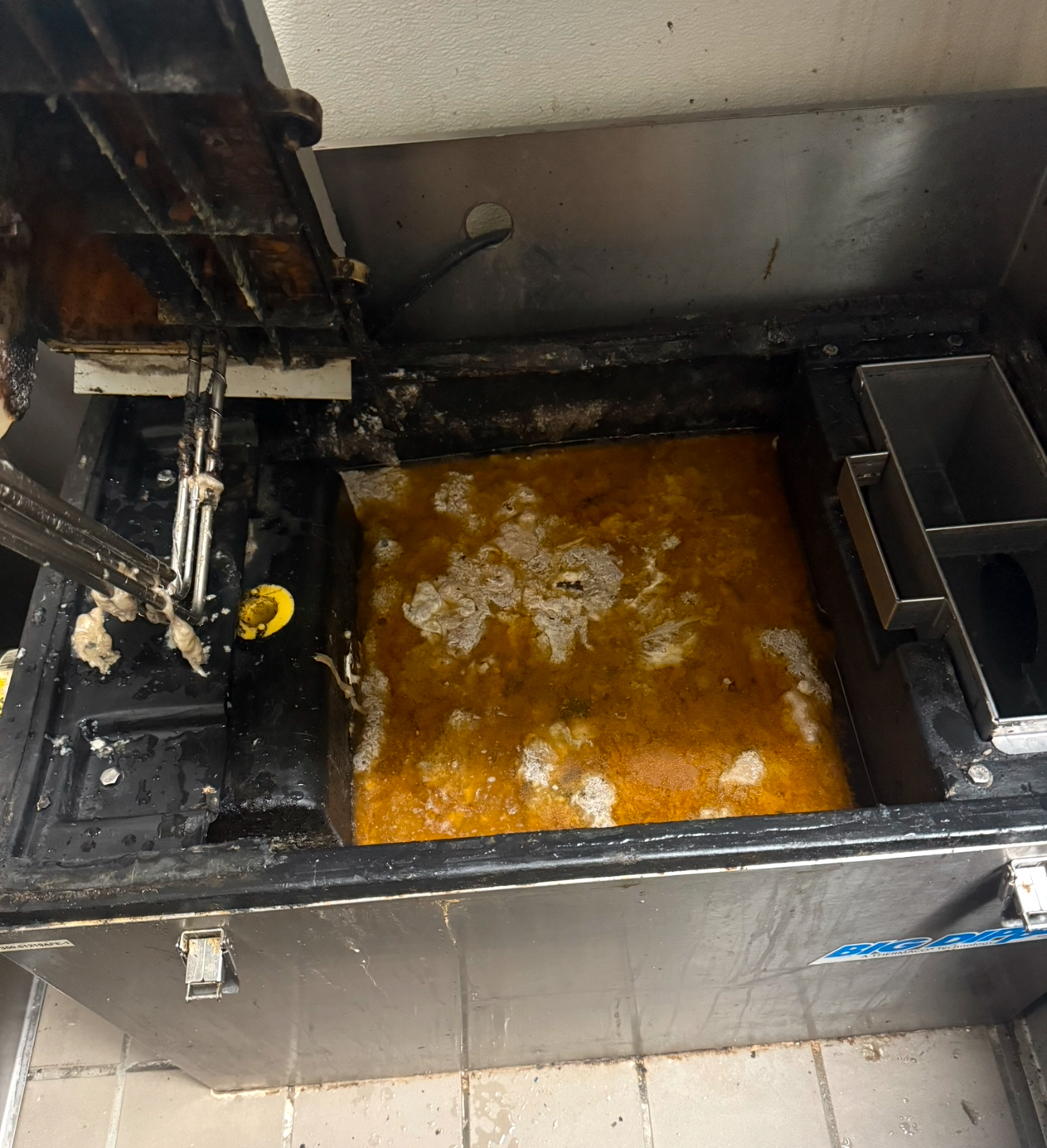
The 25% rule is a practical benchmark: service is due before the combined grease and settled solids reach one quarter of the unit's operating depth. Smaller traps may need service every few weeks; larger interceptors often run on a longer measured cycle.
Waiting for odor, slow drains or a backup means the equipment has already lost useful capacity. Recorded depth readings make it possible to adjust the next Calimesa visit before that happens.
03 · Calimesa guidance
The difference between traps and interceptors in Calimesa
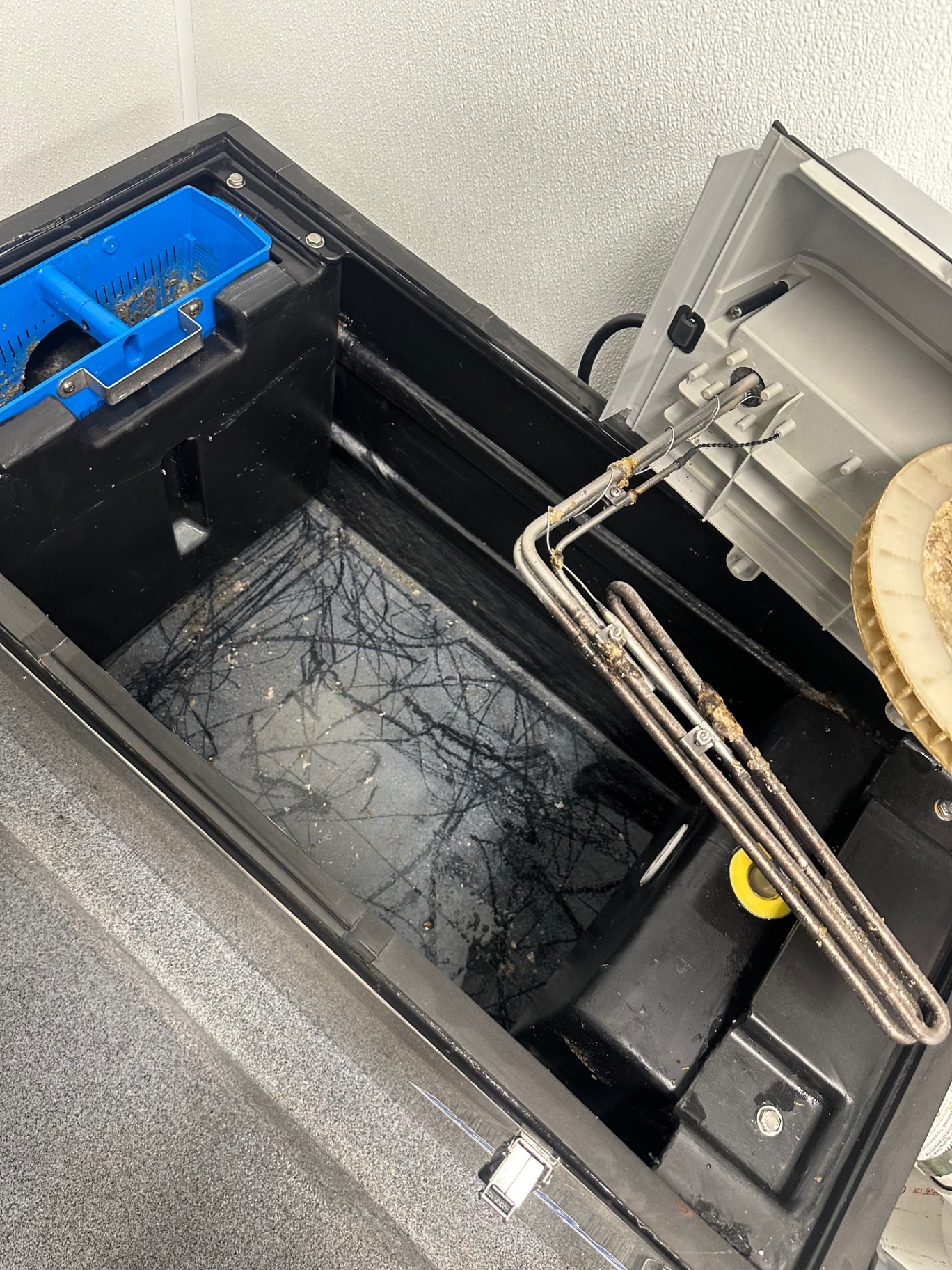
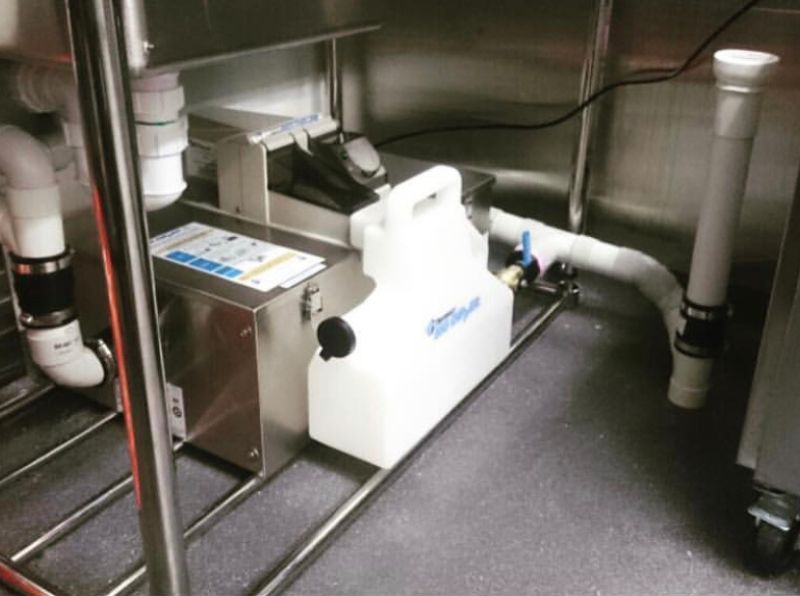
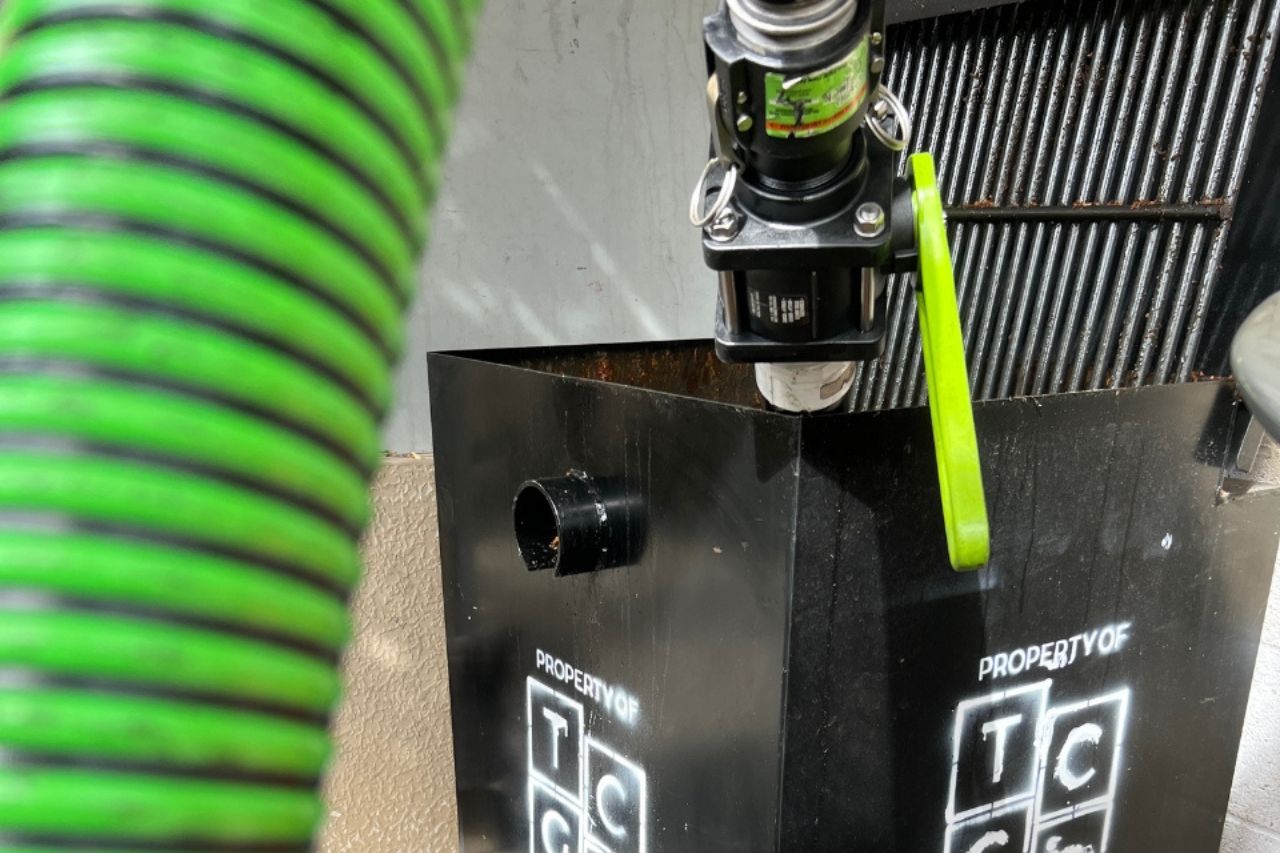
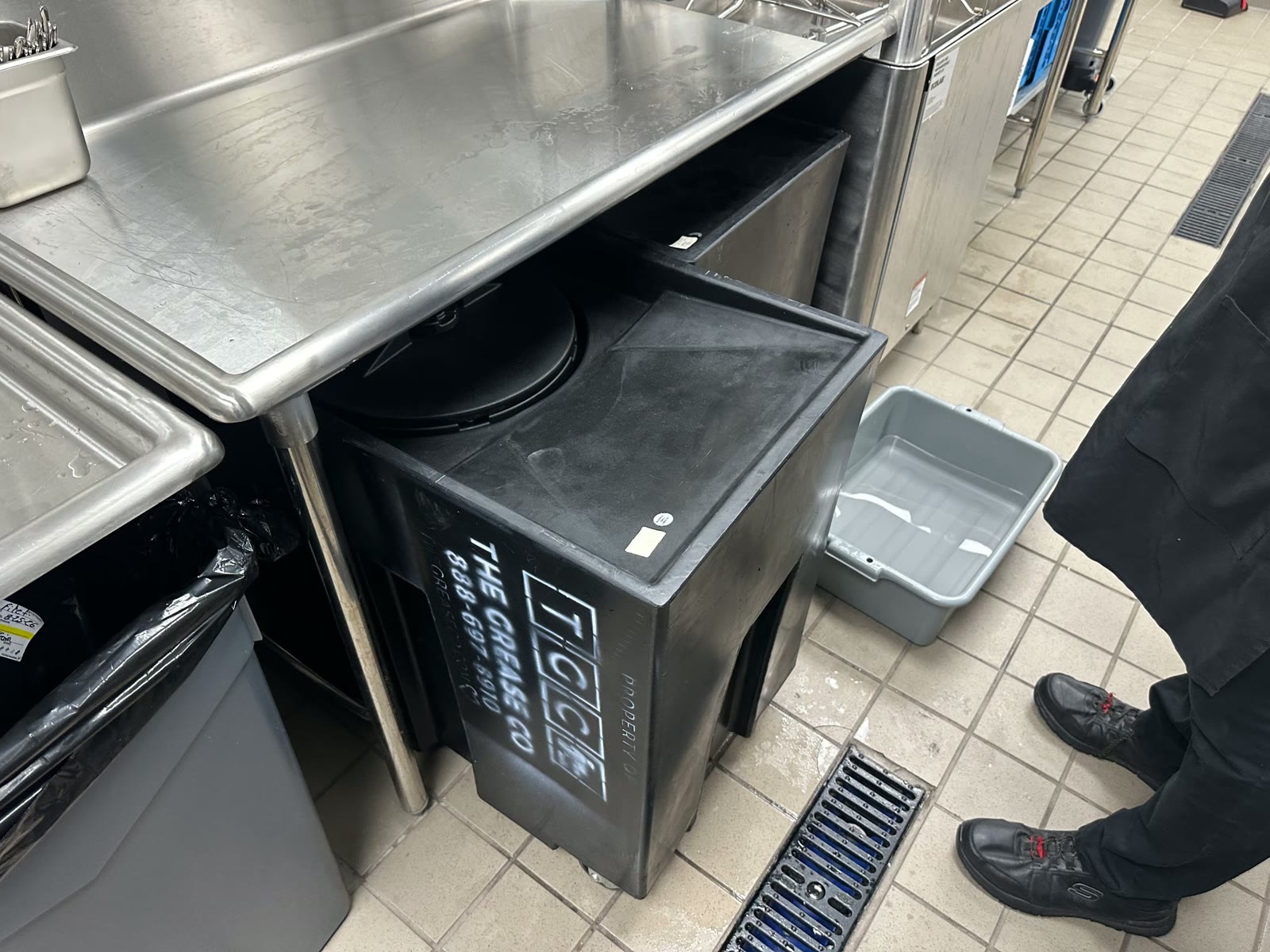
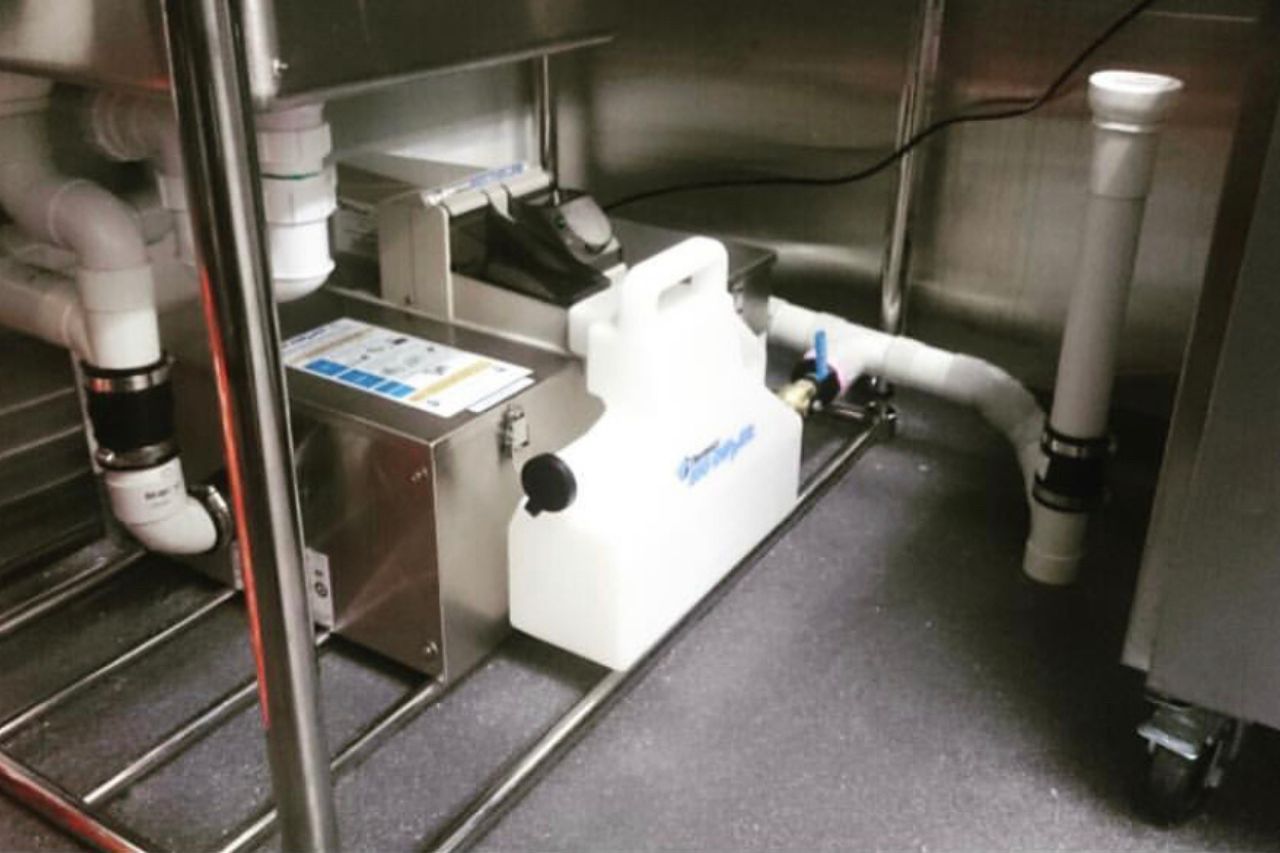
A grease trap is generally smaller, located indoors near one or more kitchen fixtures and designed for lower wastewater volumes. Its limited capacity usually means more frequent cleaning.
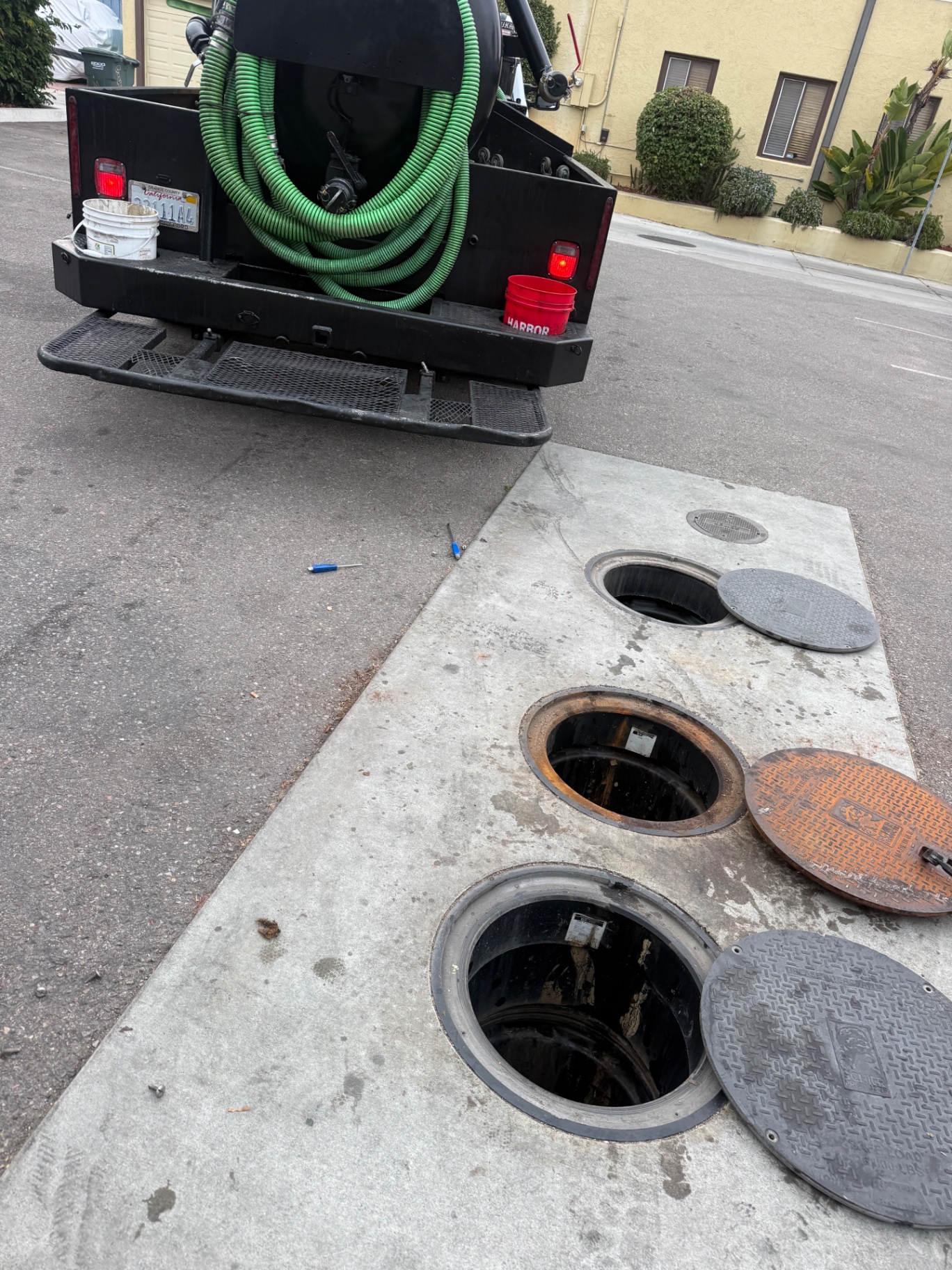
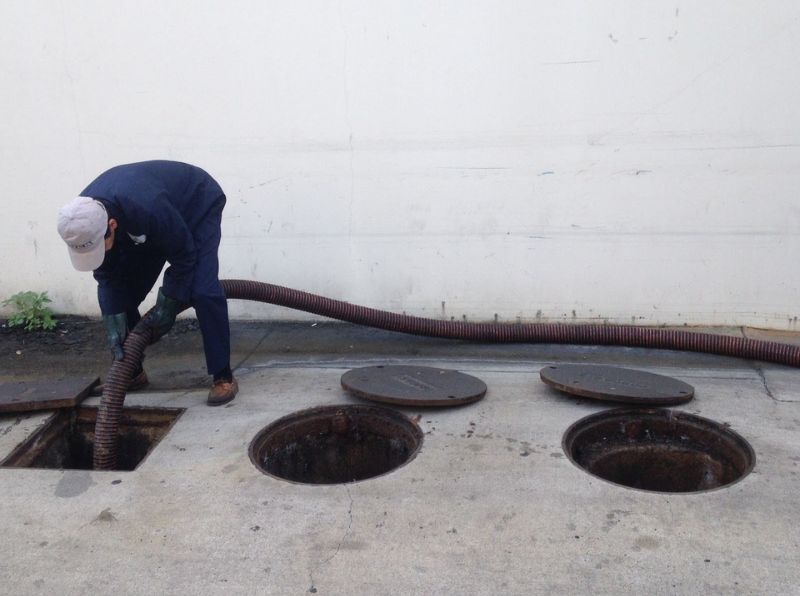
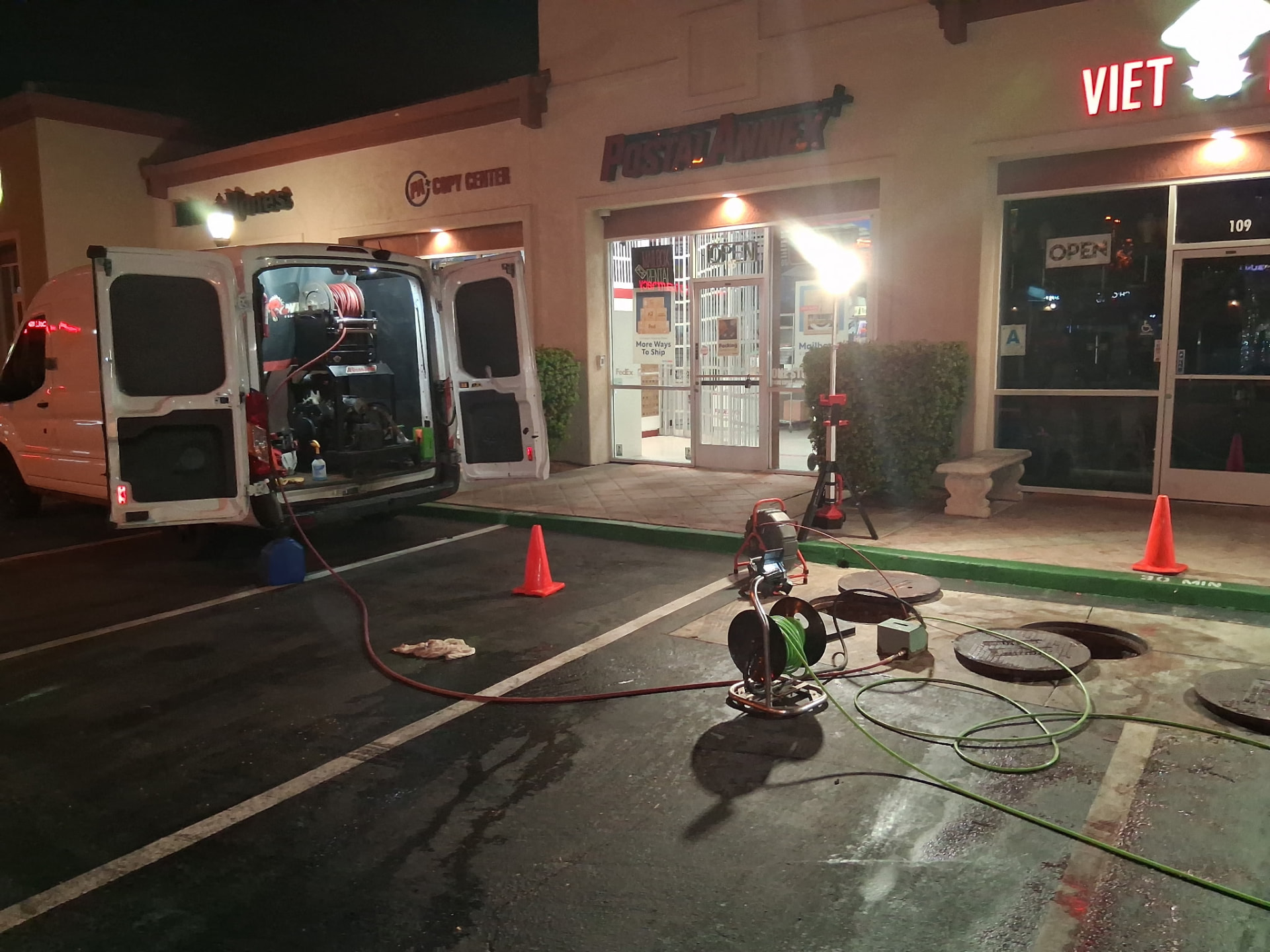
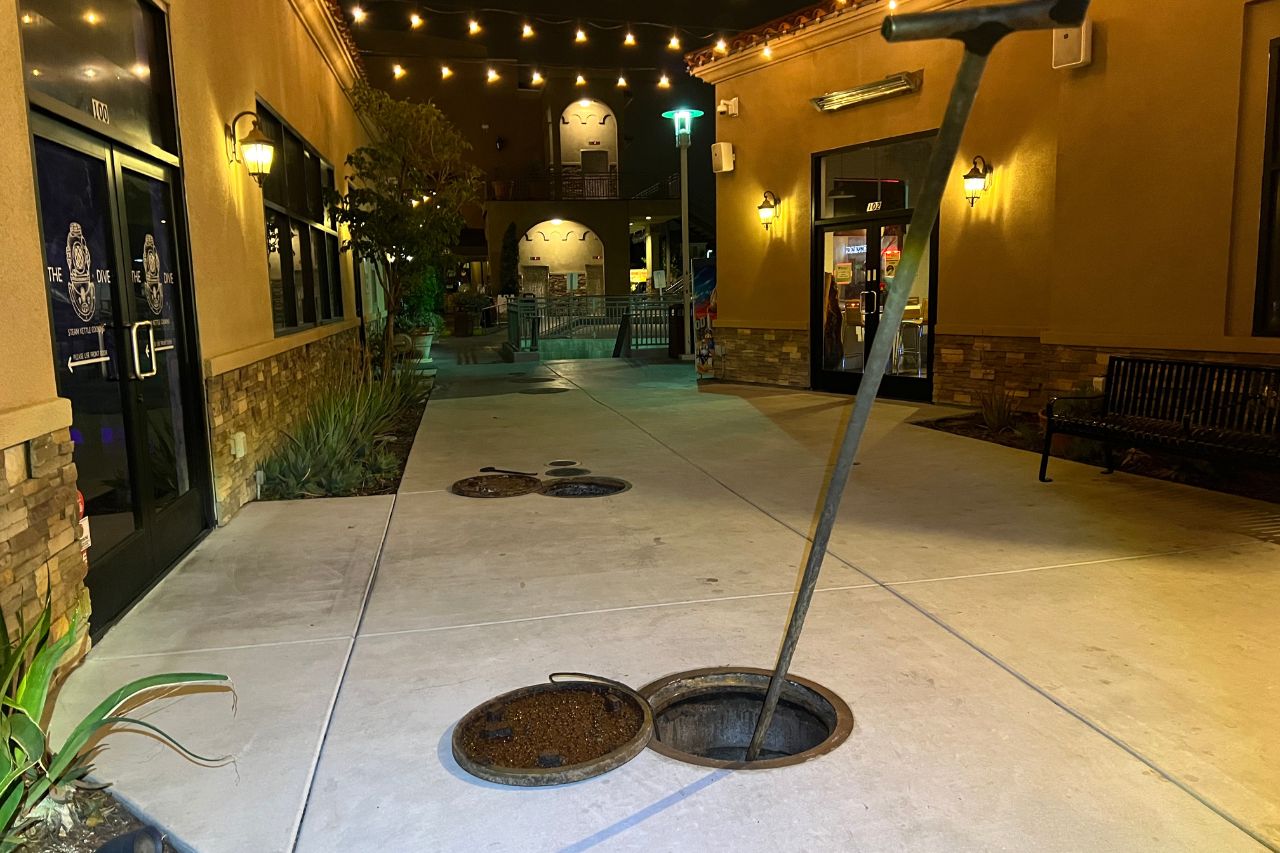
A grease interceptor is generally much larger and installed underground outside the building. It can receive higher flows and may hold hundreds or thousands of gallons, but it still needs complete evacuation of grease, wastewater and settled solids.
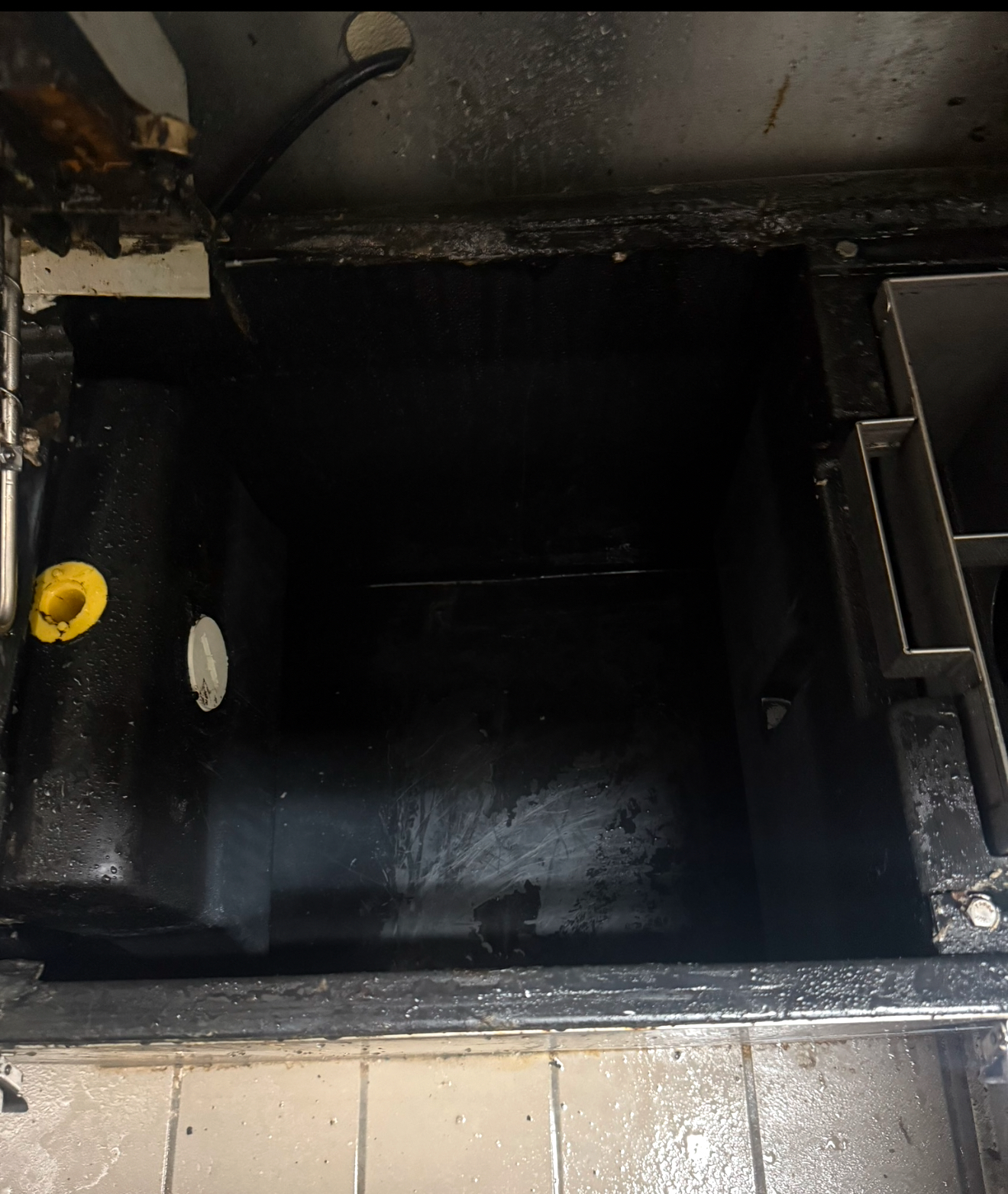
In either system, removing only the floating grease leaves sludge and lost capacity behind. Proper service empties the unit, removes adhered material and includes a visual inspection of accessible components.
04 · Calimesa guidance
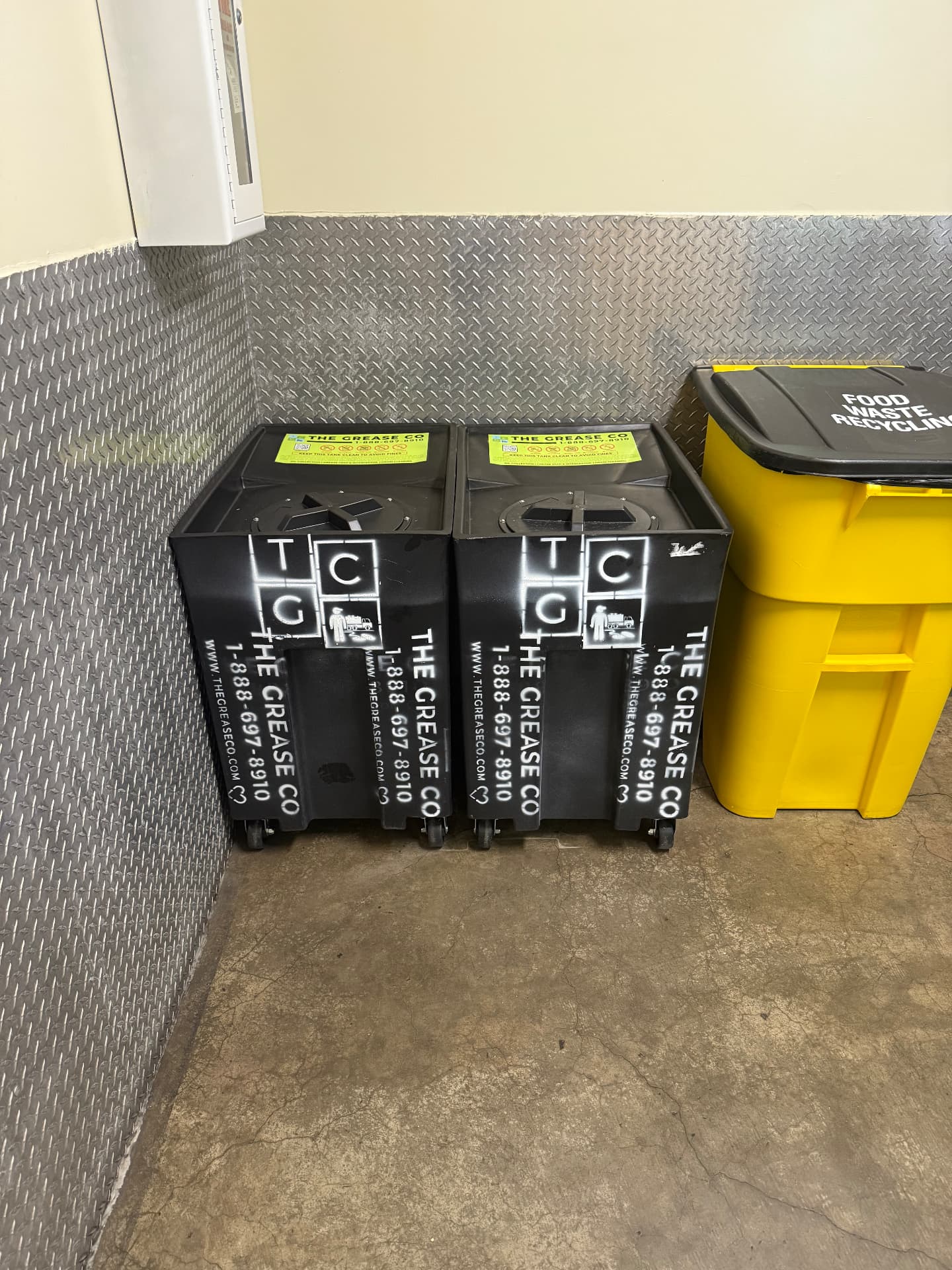
Grease belongs in the service truck—not the drain
Wash water from mats, dumpsters or oil-container areas should not carry grease to a street or storm drain. Storm drains do not provide the same treatment path as a sanitary sewer.
Preventive cleaning protects the restaurant first, but it also reduces grease entering community wastewater infrastructure. Official links below help Calimesa businesses confirm the requirements that apply to their property.
05 · Calimesa guidance
Keep the paperwork with the pumping history
After service, keep the Waste Manifest Report with pumping dates, gallons removed, equipment observations and disposal information. Before-and-after photographs can add useful condition evidence.
A consistent record helps a Calimesa manager answer inspection questions and shows whether the current service interval is controlling accumulation. It also creates a maintenance history for landlords, facilities teams and future operators.
- Waste Manifest Report
- Service date and gallons removed
- Visual inspection of components
- Disposal and maintenance history
Official information for Calimesa
Local wastewater, food-facility and sewer resources
Requirements can vary by property and wastewater provider. Use these official sources to confirm what applies to a Calimesa location.
- Calimesa official website
City services, permits and public information for businesses operating in Calimesa.
- Riverside County Environmental Health
Official food-facility plan review and environmental health information.
- California Water Boards — Sanitary Sewer Overflows
State information about sewer overflows, reporting and wastewater protection.
Plan your next Calimesa grease service
Send a lid photo or describe the trap or interceptor. Our team will help set a practical service interval for your kitchen volume.