
Frequently asked questions
Grease Trap, Interceptor & Used Oil FAQs
Get straight answers about grease trap cleaning frequency, the 25% rule, accepted cooking oils, cleanliness standards, top-dollar payouts and expired oil pickup from Riverside Grease Company.
Everything you need to know
Common questions from Riverside County commercial kitchens
From cleaning schedules and compliance paperwork to used cooking oil payouts and recycling, here are the answers we give restaurant owners, kitchen managers and facilities teams every day.
How often should a grease trap be cleaned?
Most under-sink grease traps need cleaning every 30 days. High-volume fryer or wok kitchens can fill a trap in two to three weeks, while lighter-use kitchens may stretch to 60 or 90 days. The real deciding factor is the 25% rule: when fats, oils and grease (FOG) reach roughly a quarter of the trap's total depth, it's time to pump, regardless of the calendar. We measure buildup on every visit and adjust your schedule so you never cross that line.
How often should a grease interceptor be pumped?
In-ground grease interceptors are much larger, usually 500 to 3,000+ gallons, so they are pumped less often than traps. A typical schedule is quarterly, with high-volume or fry-heavy kitchens needing service every 30 to 60 days. Like grease traps, interceptors are governed by the 25% rule. We inspect the grease cap and sludge blanket during each pump-out and recommend the safest interval for your volume.
What is the 25% rule for grease traps and interceptors?
The 25% rule is the standard used by health departments and sewer districts across California, including Riverside County. It says a grease trap or interceptor must be pumped before the combined depth of floating grease and settled solids reaches 25% of the tank's total capacity. Past that point, the device stops separating FOG effectively and starts letting grease flow downstream, which can cause backups, sewer overflows and FOG violations. We mark and photograph the buildup at every service so you have proof you stayed under the limit.
What is the difference between a grease trap and a grease interceptor?
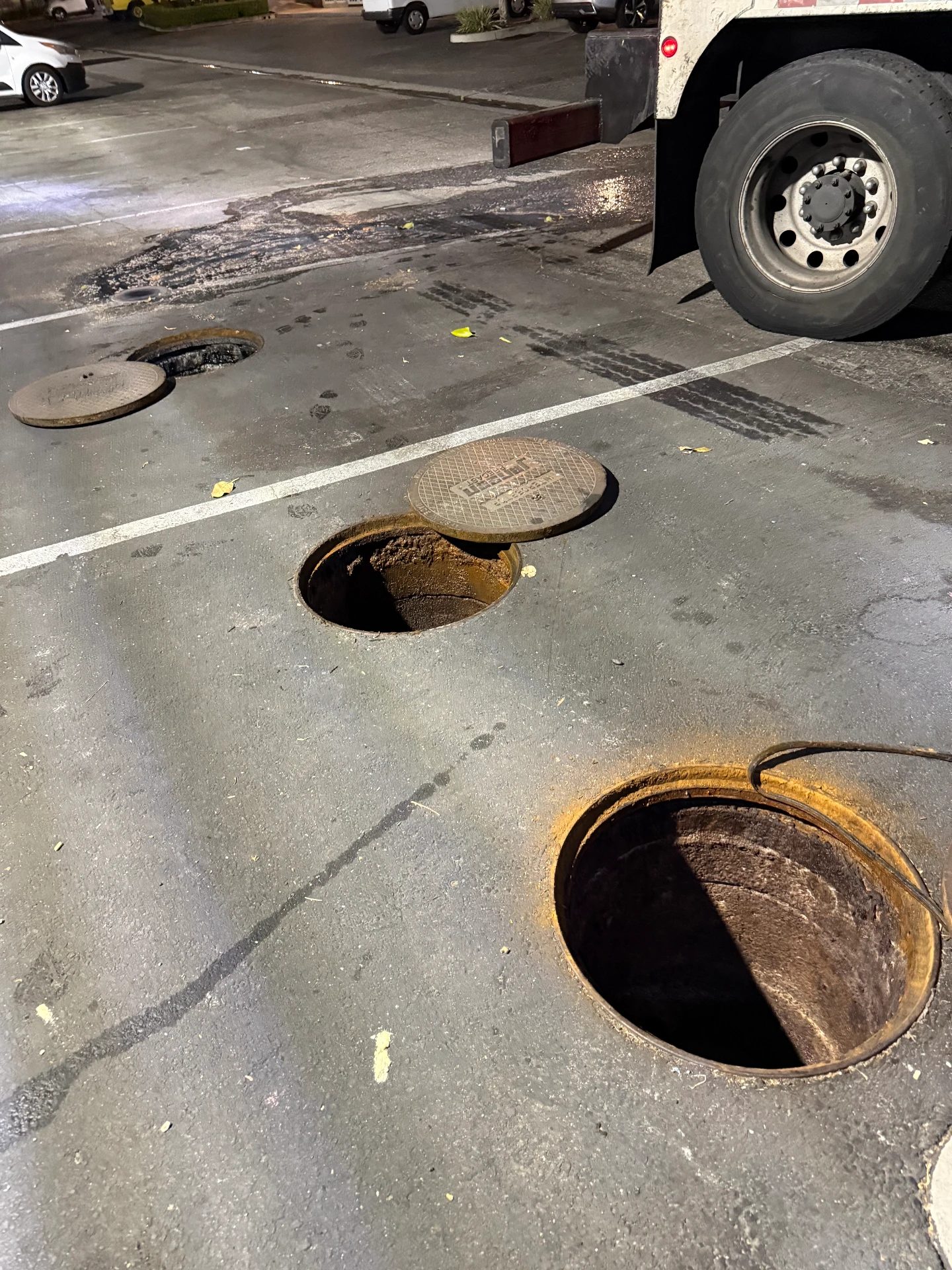
A grease trap is the smaller, usually indoor unit located under the sink or near the dish area, commonly 20 to 100 gallons. A grease interceptor is the large, in-ground tank outside the building, often in the back lot, walkway or loading area, typically 500 to 3,000+ gallons. Both separate FOG from wastewater, but interceptors handle the whole kitchen's flow and require vacuum-truck pumping. We clean and pump both.
What oils and grease do you accept?
We accept all food-grade cooking oils and rendered fats, including canola, soybean, peanut, sunflower, corn, olive, blended fryer oil, beef tallow, lard, poultry fat and grease skimmed from food prep. We also haul away unused, expired or out-of-compliance cooking oil that is still sealed in its original containers. If it came from a commercial kitchen and is food-grade, we can likely take it.
What are your cleanliness standards during service?
Clean work is non-negotiable. Our crews use sealed hoses, contain the work area, scrape walls and baffles, wipe down lids and surrounding concrete, and never leave grease or sludge behind. For used cooking oil pickups we provide sealed indoor bins and lockable outdoor tanks, pump without spills, wipe the container area, and keep your back door and walkways safe. We treat your kitchen like it's our own.
How do I get top dollar for my used cooking oil?
The payout for used cooking oil depends on quality, volume and market price. You maximize value by keeping water, food scraps and soap out of the container, using the provided sealed lid, storing oil indoors or in a lockable outdoor tank, and maintaining a regular pickup schedule so oil doesn't sit and degrade. Clean, dry, uncontaminated oil commands the best rate. High-volume accounts with steady pickups often earn the strongest returns.
Do you pick up unused, expired or out-of-compliance cooking oil?
Yes. If you have oil that is past its best-by date, off-spec, out-of-compliance with local regulations, or simply no longer usable, we will pick it up, even if it's still in the original sealed containers. We haul it to a permitted rendering or recycling facility so it is disposed of properly and never poured into the sewer or trash. Call us for a volume-based quote on large clean-outs.
What containers do you provide for used cooking oil?
We provide sealed collection containers matched to your fryer volume and space. Options include portable indoor bins with tight lids and wheels for easy handling, as well as 200+ gallon lockable outdoor tanks that deter theft and keep oil clean. Containers are not for purchase and remain the property of The Grease Company. On any stop of service or cancellation, the customer must return all equipment provided by The Grease Company, and we ask that you allow 28 business days for equipment removal.
Do you offer after-hours or emergency service?
Yes. We schedule routine work around your hours, early mornings, late nights and between shifts, so your service line is never interrupted. For emergencies such as a backed-up trap, overflowing interceptor or drain stoppage mid-shift, we dispatch as quickly as possible and provide documentation for inspectors or landlords.
Will I get a Waste Manifest Report or proof of service?
Every grease trap cleaning, grease interceptor pumping and used cooking oil pickup includes a Waste Manifest Report or service report. It shows the date, volume removed, service performed, disposal or recycling facility, and our transporter information. This is exactly what Riverside County health departments and sewer districts want to see during an inspection.
What does used cooking oil get recycled into?
Collected oil is processed at permitted rendering and recycling facilities and turned into valuable products. The largest use is biodiesel and renewable diesel. It is also used in animal feed ingredients, soaps, cosmetics, lubricants, paints and other oleochemical products. Recycling keeps FOG out of sewers and landfills and supports a lower-carbon fuel supply.
How much does grease trap or interceptor service cost?
Pricing depends on tank size, access, volume removed, frequency and whether the call is routine or emergency. Under-sink grease traps are the most affordable; large interceptors and after-hours emergency pump-outs cost more. We provide flat, no-surprise quotes before any work begins. Call 1-888-263-6637 or request a quote online for pricing specific to your kitchen.
Can I change my pickup schedule as my fryer volume changes?
Absolutely. Many kitchens are seasonal, busy summers, festival weekends, catering seasons or new menu launches can change oil output quickly. Just call or text and we'll move you to weekly, bi-weekly, monthly or on-call service to match your current volume. There is no long-term contract required.
Do you service small cities and unincorporated areas in Riverside County?
Yes. We cover every major city in Riverside County, Riverside, Corona, Moreno Valley, Temecula, Murrieta, Menifee, Hemet, San Jacinto, Perris, Lake Elsinore, Wildomar, Canyon Lake, Jurupa Valley, Eastvale, Norco, Beaumont, Banning, Calimesa, Palm Springs, Cathedral City, Rancho Mirage, Palm Desert, Indian Wells, La Quinta, Indio, Coachella and Desert Hot Springs, plus unincorporated pockets along our routes. If your kitchen is in the county, we can service it.
Grease trap cleaning
Full pump-outs, wall and baffle scraping, line checks and Waste Manifest Reports for under-sink and in-floor traps.
Learn moreGrease interceptor pumping
Complete evacuation of 500 to 3,000+ gallon in-ground interceptors, tee inspection and compliance reports.
Learn moreUsed cooking oil collection
Containers provided, scheduled pickups, top-dollar payouts and recycling into renewable fuel.
Learn moreStill have questions?
Talk to a grease management pro
Every kitchen is different. Call Riverside Grease Company at 1-888-263-6637 and we'll walk through your trap or interceptor size, fryer volume and schedule to build a service plan that keeps you compliant.
Video library
Watch grease service in action
Clips from our crews pumping traps and interceptors, plus quick tips on keeping your kitchen compliant.
24 Hour Support Available
Ready to get on a schedule?
Flat quotes, fast scheduling and full documentation on every visit.